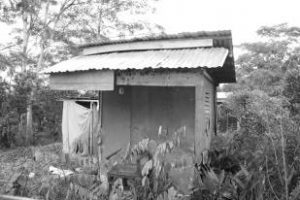
Every person at one point has faced some sort of hardship in life. But, fate always has its own way of making life worthwhile. When the odd seems unfavourable, people tend to resort to unconventional ways in order to live – going through great lengths for survival.
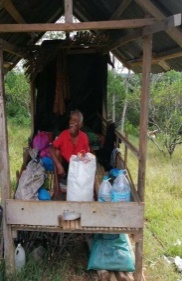
In June 10, 2020 Pedro went viral on social media because of his unique living condition. He was seen housed in a shabby shelter in a cemetery in Trento, Agusan del Sur. Someone took a video of him in that place and uploaded it on facebook, and was removed later when the appropriate actions were taken by the Barangay. Beforehand, Pedro stayed under the care of his niece Merly Lloren but due to the constant quarrel he got into with Merly’s mother, distancing was the only way for him to live a peaceful life.
Being able to live in solitude comes with challenges especially with his old age. Out on his own, he moved from one place to another until he found the perfect place – it was in a cemetery that he decided to stay. Tatay Pedro left Merly’s place without any personal belongings – no clothes (except the ones he wore). At night, instead of having pillows and blankets, tatay used a sack to keep himself warm from a cold-draft. His life there seemed so difficult – he was too frail that he can’t even lift a water container that he can use for himself. He would rather choose to take a bath occasionally because the closest spring is far from where he stays cannot afford to walk.
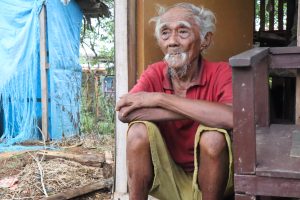
“Usahay, mapuno akong hunahuna ug pangutana kung kanus-a pa man ko mapatay ani arun dili na nako maagian pa ning kalisod sa kinabuhi (Sometimes the thought of my death comes to mind so that I will no longer suffer these hardships in life),” Tatay Pedro, shared with a deep sigh.
Sartaguda Pedro Lesondra, also known as “Tatay Pedro,” 82 years old, is a confirmed bachelor who never had children. Given the circumstances, Merly Lloren, a thoughtful niece, took all the responsibilities of extending help to her uncle in spite the distance and exhaustion she has to go through.
“Masakitan kaayo ko, maghunahuna pa lang ko nga dili nako kaayo maatiman akong uncle. Dili ko kafocus ug atiman sa iyaha kay naa koy mga responsibilidad pud, naa koy trabaho. Manglabada ko, manuroy ug floorwax, unya dili pud siya pwede nako dalaon sa balay kay nakiipon ra ko sa akong ugangan (It pains me to think that I am not able to take care of my uncle. I can’t focus on him because I also have responsibilities, I have to work. I do laundry, sell floor wax, and I can’t take him with me since I am just living with my in-laws),” Merly shared tearfully.
When the story of Tatay Pedro went on social media, the barangay officials were surprised as they were not notified of the situation, they could have taken actions without bringing it on to the platform. Anyhow, with the collaborated efforts of the barangay officials, they were able to set up a small house for him.
“Naghimo dayon mi ug emergency meeting ug gisabutan namo kung kinsay mo-donate ug mga materials nga kinahanglanon sama sa para CR, atop, haligi, bungbong unya habol, banig ug uban pa (We called for an emergency meeting and agreed on who can donate materials for the comfort room, roof, posts, wall, and also blanket, mats, and other important materials),” Richard Años, Jr., Barangay Kagawad of Pulang Lupa, Trento, ADS shared.
A challenge for sustainability and care support
The state of Tatay Pedro demands for the sustainability of support. Fortunately, Pedro is one of the active beneficiaries of Social Pension for Indigent Senior Citizens Program in Trento, Agusan Del Sur. Few of his basic needs are addressed with the pension he gets from the program. In fact, his situation is way better than where he was before.
“Mas hayahay na karon. Sauna, sakit kaayo sa dughan tan-awon ang sitwasyon ni Tatay Pedro nga nag-antos. Ug unsay naa sa ako o iyang pangayuon mao ra gyud pud nay ikahatag nako Ma’am, kay kasagaran among kita igo ra pud sa among kinahanglan. Usahay muhatag kog pagkaon sa iyaha or kanang magkuha siya dinhi sa tindahan pasagdaan ra nako kung mubayad siya o dili, kung mubayad dili nako dawaton (It’s way better now than before. Looking back, it was so heart-rending seeing Tatay Pedro in distress. We would give him whatever extra we had, or whatever he would ask from us, nothing more, since our income is only enough for our needs. Sometimes, I’d give him food or every time he would take something from my store I don’t mind him paying for it or not, or if he pays I would refuse.” – Glenda Lopena, Tatay Pedro’s neighbor, shared.
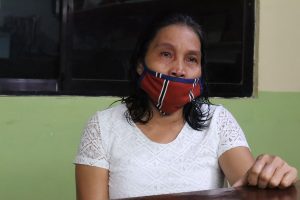
Despite the busy schedule of Merly in doing all the household chores, working, and running errands, attending to Tatay Pedro has been part of her day. Randomly, she would visit Tatay, bring some food and do the laundry. When asked how’d she get through all the expenses for Tatay Pedro, and if she at times felt exhausted, she got so emotional and said, “Kung wala ang Social Pension niya ma’am, maglisod gyud kog mayo. Pasalamat gyud ko ug dako sa pension nga iyang ginadawat kay naabagan gyud ang iyang mga kinahanglanon. Bation gud ko ug kapoy maam kay naa pud ko ugangan nga edaran napod giatiman sa balay. Naay mga panahon nga mangayo nalang gud ko ug pasensya sa iyaha, kay kabalo ko bisan ug mao ra nay makaya nako dili gihapon paigo labina nga dili nako siya madala sa balay unya layo siya nagpuyo. (If not because of his social pension he receives, it would be so difficult for me. I am so grateful for the pension since it addresses his needs. I could feel worn out as well, Ma’am, because I also have an elderly in-law to take care of at home. There are days that I would ask for an apology from him because though I provide for his needs, I know it is not enough, especially that I could not bring him with me home and he is distant from me).”
For Tatay Pedro, living in solitude was his way of living in peace. Though there are some, like Merly and Glenda who looks after his welfare, their help is still not enough from the growing demands of the degradation of Tatay Pedro’s condition. He needs all the help he can get, especially to sustain his basic needs. This is where the Social Pension Program comes in, and the constant help of the Barangay Local Government Unit. As a matter of fact, the Social Pension social worker, together with the Barangay Officials, came up with the idea of conducting random visits to Tatay to constantly check on his condition. That way, it could lessen the feeling of despair that Tatay Pedro is having.
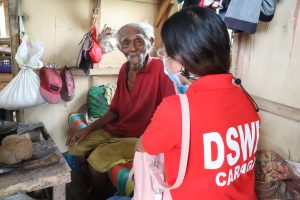
As matter of fact, last August 2020, Tatay Pedro’s case was referred to the Crisis Intervention Section (CIS) of DSWD Caraga where he was provided family food packs as an instant response for his needs.
Indeed, Tatay Pedro needs all the care he can get. And it is not just for his medicine, or food, but he needs a more holistic care, including activities for his mental and emotional needs. This is how the Department of Social Welfare and Development is addressing the needs of Tatay Pedro. And this is through the different programs and services of the agency, and through constant coordination with other stakeholders, such as the local government units.